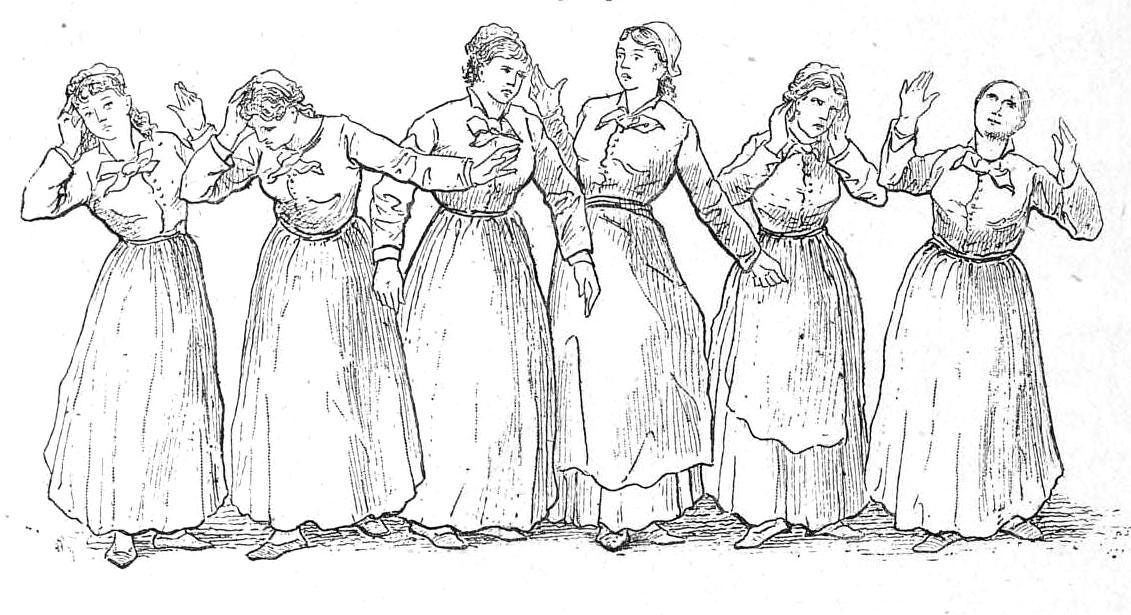
An 1893 depiction of a woman with hysteria. By Albert Londe - La photographie médicale : application aux sciences médicales et physiologiques. Public Domain, https://commons.wikimedia.org/w/index.php?curid=92886323
Last week I listened to a podcast episode that has left me feeling very thoughtful. The podcast is called Feel Better, Live More by the wonderful Dr Rangan Chatterjee. The episode - “The Revolutionary Science of Recovering From Chronic Pain, Fatigue, Anxiety & Depression” - features another wonderful human, Dr Howard Schubiner. They talk about the mind-body connection in great detail and offer incredible and useful advice, and I strongly recommend the episode.
The conversation taught me a new term: neuroplastic pain. Simply put, neuroplastic pain is pain for which we, the healthcare providers, are not able to find a structural cause. The pain is real but may not be connected to any physical reason. Dr Schubiner says that a large majority of patients who live with the diagnosis of “chronic pain” have neuroplastic pain. In his book - Unlearn Your Pain - he offers a volume of high-quality research to support the growing medical understanding that neuroplastic pain can be treated, even reversed. I look forward to reading this book (for myself and for my patients). Please message me if you’re reading this book and want a study-buddy.
As I was listening to the episode, I realised that even though the term is new, I know this idea. In the psychiatry classes in final year of medical school, I learned about “psychosomatic pain” which had a similar definition – pain that does not have a physical cause. The difference was that these were taught as diagnoses of dismissal, bordering on disrespect; we were taught that the pain is not real, the patient is making it up, and the best thing we can do for them is humour them and treat them with placebos.
We have other wonderful labels on this theme of not-real pain. One is “malingering” (which continues to be used and included in DSM classification even though it has frequently been challenged as being very prone to misdiagnosis). Another, even better one is “hysteria” which thankfully was already outdated by the time I was in med school. (Fun facts about “Hysteria” which was only removed from DSM-III in 1980: it was a popular diagnosis among physicians in Western Europe for hundreds of years; symptoms included anxiety, high libido and “a tendency to cause trouble for others”; treatment included genital stimulation, asylum stays and hysterectomy.)
We live in difficult times, but at least some kinds of barbarisms are behind us. Psychosomatic pain (or illness) has been renamed to neuroplastic pain (or illness). Modern practitioners are taught that these symptoms are not imaginary, and dismissiveness is not acceptable. Treating physicians are offered a detailed step-by-step pathway to diagnose and treat this type of pain. A core technique is cognitive reappraisal or somatic tracking which has been shown to be an effective pain management tool in RCTs. In the landmark Ashar et al. RCT (JAMA Psychiatry, 2022; n=151), 66% of chronic back pain patients were pain-free or nearly pain-free at the end of treatment, compared with 20% on placebo and 10% on usual care.
The renaming of psychosomatic pain to neuroplastic pain is, for me, a powerful example of how modern healthcare is evolving towards becoming a more respectful, patient-centric practice. It fills me with gratitude that we’re not diagnosing people as “hysterical” any more and are cautious about labels like “malingerers”. It makes me want to list other, similar, evolutions that I am grateful for.
Hormone Replacement Therapy (HRT) for menopause was dreaded and feared for years; women experiencing awful menopausal symptoms were prescribed HRT with a lot of warnings and judgment (largely a hangover from the 2002 Women’s Health Initiative findings, which were later re-analysed and substantially revised). It is now Menopausal Hormone Therapy (MHT), and with every passing year, increasingly large number of women are utilizing their agency to demand it and receive it from their healthcare practitioners.
TB patients who stopped their TB treatment for any reason (horrible side effects, drug stockouts) were called “defaulters”. WHO revised the definition in 2013, and we now recognise the fault where it actually belongs and call them “Lost to Follow-Up”, or LTFU.
If someone had symptoms that looked like TB (cough, fever, weight loss), my medical textbooks labelled them as “TB suspects”. We now say “people with presumptive TB” or “people with symptoms suggestive of TB”. It might make TB documents longer, but we say the respectful thing.
There are more examples. People who inject drugs are now called exactly that neutral term, not addicts or abusers. It’s hard to believe now that “AIDS victims” was an actual term in 1980s and 90s (UNAIDS formalised “people living with HIV” in its terminology guidelines in response to the “Denver Principles,” written in 1983 by people living with HIV themselves).
Words have infinite power. I am thankful for the work that activists and advocates have done and continue to do, to teach us the right words. Words that do not shame the people who are navigating healthcare systems. Tell me about other semantic evolutions that make you happy and grateful.