Showing posts with label Lifestyle Medicine and Public Health. Show all posts

Sunday, June 21, 2026

From “Hysteria” to Neuroplastic Pain - it's been a journey

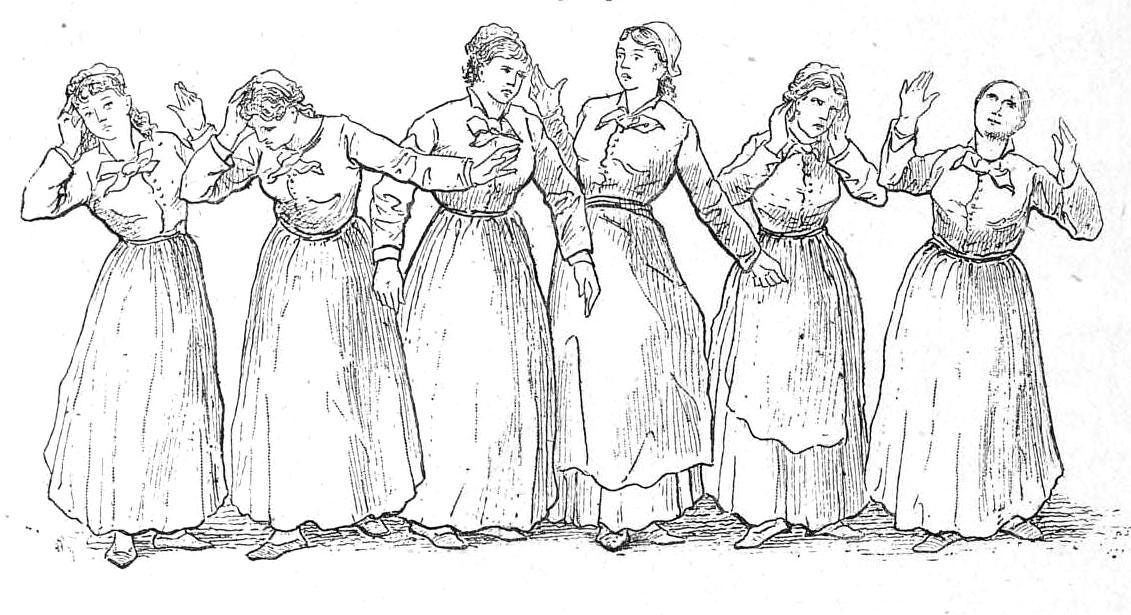
An 1893 depiction of a woman with hysteria. By Albert Londe - La photographie médicale : application aux sciences médicales et physiologiques. Public Domain, https://commons.wikimedia.org/w/index.php?curid=92886323

Last week I listened to a podcast episode that has left me feeling very thoughtful. The podcast is called Feel Better, Live More by the wonderful Dr Rangan Chatterjee. The episode - “The Revolutionary Science of Recovering From Chronic Pain, Fatigue, Anxiety & Depression” - features another wonderful human, Dr Howard Schubiner. They talk about the mind-body connection in great detail and offer incredible and useful advice, and I strongly recommend the episode.

The conversation taught me a new term: neuroplastic pain. Simply put, neuroplastic pain is pain for which we, the healthcare providers, are not able to find a structural cause. The pain is real but may not be connected to any physical reason. Dr Schubiner says that a large majority of patients who live with the diagnosis of “chronic pain” have neuroplastic pain. In his book - Unlearn Your Pain - he offers a volume of high-quality research to support the growing medical understanding that neuroplastic pain can be treated, even reversed. I look forward to reading this book (for myself and for my patients). Please message me if you’re reading this book and want a study-buddy.

As I was listening to the episode, I realised that even though the term is new, I know this idea. In the psychiatry classes in final year of medical school, I learned about “psychosomatic pain” which had a similar definition – pain that does not have a physical cause. The difference was that these were taught as diagnoses of dismissal, bordering on disrespect; we were taught that the pain is not real, the patient is making it up, and the best thing we can do for them is humour them and treat them with placebos.

We have other wonderful labels on this theme of not-real pain. One is “malingering” (which continues to be used and included in DSM classification even though it has frequently been challenged as being very prone to misdiagnosis). Another, even better one is “hysteria” which thankfully was already outdated by the time I was in med school. (Fun facts about “Hysteria” which was only removed from DSM-III in 1980: it was a popular diagnosis among physicians in Western Europe for hundreds of years; symptoms included anxiety, high libido and “a tendency to cause trouble for others”; treatment included genital stimulation, asylum stays and hysterectomy.)

We live in difficult times, but at least some kinds of barbarisms are behind us. Psychosomatic pain (or illness) has been renamed to neuroplastic pain (or illness). Modern practitioners are taught that these symptoms are not imaginary, and dismissiveness is not acceptable. Treating physicians are offered a detailed step-by-step pathway to diagnose and treat this type of pain. A core technique is cognitive reappraisal or somatic tracking which has been shown to be an effective pain management tool in RCTs. In the landmark Ashar et al. RCT (JAMA Psychiatry, 2022; n=151), 66% of chronic back pain patients were pain-free or nearly pain-free at the end of treatment, compared with 20% on placebo and 10% on usual care.

The renaming of psychosomatic pain to neuroplastic pain is, for me, a powerful example of how modern healthcare is evolving towards becoming a more respectful, patient-centric practice. It fills me with gratitude that we’re not diagnosing people as “hysterical” any more and are cautious about labels like “malingerers”. It makes me want to list other, similar, evolutions that I am grateful for.

  • Hormone Replacement Therapy (HRT) for menopause was dreaded and feared for years; women experiencing awful menopausal symptoms were prescribed HRT with a lot of warnings and judgment (largely a hangover from the 2002 Women’s Health Initiative findings, which were later re-analysed and substantially revised). It is now Menopausal Hormone Therapy (MHT), and with every passing year, increasingly large number of women are utilizing their agency to demand it and receive it from their healthcare practitioners.

  • TB patients who stopped their TB treatment for any reason (horrible side effects, drug stockouts) were called “defaulters”. WHO revised the definition in 2013, and we now recognise the fault where it actually belongs and call them “Lost to Follow-Up”, or LTFU.

  • If someone had symptoms that looked like TB (cough, fever, weight loss), my medical textbooks labelled them as “TB suspects”. We now say “people with presumptive TB” or “people with symptoms suggestive of TB”. It might make TB documents longer, but we say the respectful thing.

There are more examples. People who inject drugs are now called exactly that neutral term, not addicts or abusers. It’s hard to believe now that “AIDS victims” was an actual term in 1980s and 90s (UNAIDS formalised “people living with HIV” in its terminology guidelines in response to the “Denver Principles,” written in 1983 by people living with HIV themselves).

Words have infinite power. I am thankful for the work that activists and advocates have done and continue to do, to teach us the right words. Words that do not shame the people who are navigating healthcare systems. Tell me about other semantic evolutions that make you happy and grateful.

Friday, June 12, 2026

What is Lifestyle Medicine? Part 2 (of 2)

[I am a Lifestyle Medicine doctor (in-training). About a month ago, I submitted a (less opinionated) version of this piece as my Term 1 assignment for the year-long course I am doing with the Indian Society of Lifestyle Medicine (ISLM). ISLM has partnered with the British Society of Lifestyle Medicine (BSLM) to develop the course for Indian physicians. The views expressed here, although informed by my ISLM-BSLM curriculum, are my own.]

The Case for Lifestyle Medicine (LM)

As a new entrant to this community, I cannot help observing that Lifestyle Medicine physicians are simply a different kind of doctor. I find them sincere, kind, enthusiastic and mildly evangelical in their passionate desire to spread the understanding that good health is achievable through human effort. I am grateful for the series of chance encounters that brought me to this training, and I have embarked on this year long learning journey with the discipline and excitement it deserves.

Despite the many encouraging trends (a large and growing evidence base, thematic agreement across societies, surging physician interest), no country has yet formally recognised LM as a stand-alone postgraduate medical specialty. The UK currently comes closest: in 2024, the Royal College of General Practitioners (RCGP) established a recognised role: a GP with Extended Role in Lifestyle Medicine or a “GPwER-LM” (I bet these new GPs wished they had an easier name). Across UK, GPwER-LMs are leading dedicated lifestyle medicine clinics in primary or secondary care settings, heading multidisciplinary LM teams, and using lifestyle interventions specifically oriented toward treating (and in some cases reversing) type 2 diabetes, obesity, and metabolic liver disease. To my knowledge, this is the most significant step toward formal health-system integration that LM has achieved anywhere in the world.

The limited recognition is a mixed blessing. On the one hand, it makes the science accessible with minimal gatekeeping. On the other, it comes with limited regulation and oversight - which carries its own challenges, particularly when separating evidence-based practice from wellness marketing.

For me, five themes have emerged in the last two months of learning that define LM’s value in these complicated modern times.

1. Human behaviour >>> medical interventions

LM uses individual behaviour - rather than medical interventions - as the primary lever to manage health. As Dr Michael Greger puts it pithily in a BSLM course video, “exercise and nutrition are the penicillin of Lifestyle Medicine.” Each of the six pillars has independent evidence on health linkages. The LM ethos establishes that while medicines can treat conditions, behaviours can do more: treat the condition, treat underlying (or root) causes AND bring in additional whole-health benefits.

2. Evidence-based, but not at the cost of agility

The evidence-to-practice lag in conventional medicine is, on average, about seventeen years. Let me say this again: when scientists prove that some treatment modality works, it can take an average of 17 years for it to become part of global guidelines and recommendations. It can take longer for it to be taught in medical schools. For me, one of the most interesting examples of this knowledge-to-practice gap is the possibility of remission in type 2 diabetes (T2D). In 2011, the Counterpoint study first showed that T2D could be reversed through an 8-week very-low-calorie diet. Seven years later, the DiRECT Trial (Diabetes Remission Clinical Trial), published in The Lancet in 2018, confirmed this with a proper RCT which showed 46% of participants achieved remission at one year, 36% at two years. Hope was expressed that primary care physicians would use these findings to help people with T2D get off their medications. Is this taught in any medical school I know of? Nope. I asked around in my physician network, and the only doctor friend using this evidence with her patients is a family medicine practitioner who is also a trained Lifestyle Medicine doctor. “Deprescribing” - the opposite of prescribing, or the work of helping people taper off their medications - is now one of my favourite words, and one of my favourite lines of study.

Lifestyle Medicine teaches practitioners to use evidence-based strategies and also to evaluate and apply research more quickly. To do this, it uses something called the Hierarchies of Evidence Applied to Lifestyle Medicine (HEALM) framework, which says there are five types of evidence that, taken together, can build a credible case for any lifestyle intervention: randomised controlled trials (RCTs), prospective cohort studies, case-control studies, mechanistic research, and ecological or population-level data. The clever move is that HEALM doesn’t insist on RCTs as the sole gold standard: it accepts that for questions about lifetime effects of how we eat, move, sleep and relate, you often can’t run an RCT, and the honest thing to do is triangulate across different types of evidence. This dedication to agility and to using science faster is important because evidence is coming in thick and fast. I have to admit that even this framework is too strict and can be exclusionary towards other kinds of evidence like qualitative research, patient-reported outcomes, and the “long-but-less-scientifically” knowledge of traditional medical systems.

3. Human centricity

Conventional medicine can tend to be hierarchical: doctors hold more power than patients, and senior doctors hold more power than junior ones. At its worst, this manifests as violence against patients. Twenty years out of med school, I remain traumatised by what I have witnessed in labour wards, a phenomenon the global literature now formally names obstetric violence. At its most benign, the unequal power in the medical profession shows up in the excessive “sirs” and “ma’ams” still used in hospitals across South and Southeast Asia, long after these forms of address have been abandoned in other professional settings. And then there is the everyday friction of patients who arrive having googled their condition - a keenness to be prepared that some doctors (not all, to be fair) experience as a challenge to their expertise rather than as engagement with their own health.

LM, with its whole-person, behaviour-driven approach, upends this dynamic. The work of healing is done through the patient’s own actions - which makes the patient the entity with greater agency in the partnership. The doctor’s role shifts toward coach, partner, and evidence-translator rather than the authority figure who dare not be challenged. As someone long troubled by the power inequities in healthcare systems, I find a quiet poetic justice in this reversal. Perhaps this is why one of my textbooks describes Lifestyle Medicine as “as much an art as a science.”

It would be fair to wonder whether lifestyle medicine can potentially create new forms of paternalism. Lifestyle advice can easily slide into moralising, can place the burden of disease on individual choice and can be experienced by patients as judgmental (“you got diabetes because you ate badly”). Although we are taught to avoid this by paying attention to social determinants of health and by being intentional about shared-decision-making and behavioural coaching, it is an important red flag to watch for.

4. It’s what the people want

It won’t surprise anyone that “How to lower my blood pressure” is one of the most-googled health questions globally. Various studies have shown that one out five patients who are prescribed statins (the medicine to lower serum cholesterol) are unwilling to take the drug - not because they don’t believe that the drug works, but because of concerns around side effects. LM can empower people keen to take charge of their own health, with or without medication.

Another noteworthy societal trend is the growing scrutiny of capitalism, and the possibility that alternative economic systems are not just possible but perhaps urgently necessary; LM is one of the few medical fields that explicitly engages with the “commercial determinants of health” and acknowledges that there are many ways in which commercial interests are hurting wellbeing.

5. Alignment with the “Anthropocenic” challenges

As other climate-change-obsessed readers might know, Anthropocene is the name of the geological epoch we’re living in. It started sometime between the Industrial Revolution and the mid-20th century, and it is defined by the dominant presence and impact of human activity on Earth’s climate, ecosystems, and geology. There are four Anthropocene-era that challenges keep me awake at night, and LM speaks directly to each.

Ageing demographic. The factors that keep healthcare costs in check within a fast-expanding elderly demographic - staying mobile, eating well, sleeping well, staying socially connected - align neatly with LM’s six pillars.

Mental health. Roughly 1 in 7 humans now lives with a mental health disorder, and the need for mental health support is rising disproportionately faster than the available support. Lifestyle interventions offer a parallel, scalable, lower-cost adjunct to pharmacotherapy and psychotherapy. An RCT-backed dietary intervention (the SMILES trial) achieved depression remission in 32% of participants with moderate-to-severe depression versus 8% in controls.

Rising cost of healthcare. Non-communicable diseases (NCDs) - cardiovascular disease, cancers, diabetes, and chronic respiratory disease - account for about three-quarters of all deaths globally and are the biggest drivers of hospital admissions and healthcare spend. By tackling the modifiable risk factors that underlie these conditions, LM can meaningfully reduce healthcare costs. COVID-19 amply (and tragically) demonstrated the lifestyle–healthcare-cost linkage: people with poorly controlled cardiometabolic conditions had dramatically worse outcomes and accounted for a disproportionate share of hospitalisation costs.

Climate change. LM is planet-forward! It can impact one of the most influential climate change levers: transitioning toward plant-predominant diets can reduce diet-related greenhouse gas emissions by up to ~49% and freshwater use by up to ~21%. The same dietary patterns that lower cardiovascular risk also lower the carbon footprint of food.

Next:

I Ran 10K This Morning. I am still a “sedentary human”. (Why physical inactivity and sedentary behaviour are different things - and how both, independently, can shorten your life)

Monday, June 1, 2026

What is Lifestyle Medicine? Part 1 (of 2)

[I am a Lifestyle Medicine doctor (in-training). About two weeks ago, I submitted a (less opinionated) version of this piece as my Term 1 assignment for a year-long course I am doing with the Indian Society of Lifestyle Medicine (ISLM). ISLM has partnered with the British Society of Lifestyle Medicine (BSLM) to develop the course for Indian physicians. The views expressed here, although informed by my ISLM-BSLM curriculum, are my own.]

What is Lifestyle Medicine?

To paraphrase the American College of Lifestyle Medicine (ACLM): Lifestyle Medicine (LM) is a medical specialty that uses therapeutic lifestyle interventions to treat, prevent, and (where possible) reverse chronic conditions such as cardiovascular disease, type 2 diabetes, and obesity.

How it began

The philosophical foundations of Lifestyle Medicine go back at least two millennia, probably around the time Hippocrates famously said, “Let food be thy medicine and medicine be thy food.” His contemporary Galen of Pergamon prescribed specific exercises for specific health conditions. Many Greek-Roman writings of this time reflect the understanding that diet, exercise, rest, emotional state, and environment are the primary determinants of health and disease. In Asia - sometime before Hipocrates and Galen - Ayurveda was documenting the wisdom of dincharya (daily routine for health) and ahara (the link between nutrition and health), and Traditional Chinese Medicine (TCM) was emphasising the value of movement (through Qi Gong) and dietary balance (through Shi Liao).

The parallels across traditions are interesting: the Greek ideal of sophrosyne (“moderation in all things”) and the Ayurvedic dictum of ati sarvatra varjayet (“avoid excess in everything”) say essentially the same thing. The idea that how one lives determines one’s health was near-universal. And then we sort of forgot about it. The rise of germ theory in the 19th century and the pharmaceutical revolution of the 20th gradually displaced lifestyle-centered thinking from mainstream medicine, reducing it to background context against the powerful promise of drugs and surgery.

How it began, again (for the modern times, via modern methods)

LM began its comeback in the mid-20th century through two parallel developments: (a) the leading causes of death started to shift from infectious diseases to non-communicable diseases (NCDs) like diabetes and cardiovascular diseases; and (b) evidence that linked human behaviour to NCDs started to pile up. Landmark studies like the Framingham Heart Study (1948) and the Seven Countries Study (1958) were among the first to show the relationship between habits and disease. Further research made it clear that humans had vastly underestimated the toll that modern sedentary, processed-food-driven lifestyles were taking and that reversals were possible with data-backed behavioral changes. LM thus coalesced into a recognised, structured discipline based on the evidence that could no longer be ignored.

It’s all fairly new though. The American College of Lifestyle Medicine (ACLM), the first LM-focused professional medical association, was set up in 2004; the American Journal of Lifestyle Medicine (AJLM), the first LM-focused scientific journal was published in 2007. At this point, there are just over thirty national and regional Lifestyle Medicine societies. A recent entrant is the ISLM in India - a key geography for LM, not only because we are home to the largest population in the world, but also because we hold the dubious distinction of being the diabetes capital of the world. These national societies are linked through two umbrella bodies at the global level: the World Lifestyle Medicine Organisation (WLMO) and the Lifestyle Medicine Global Alliance (LMGA).

The six pillars of Lifestyle Medicine

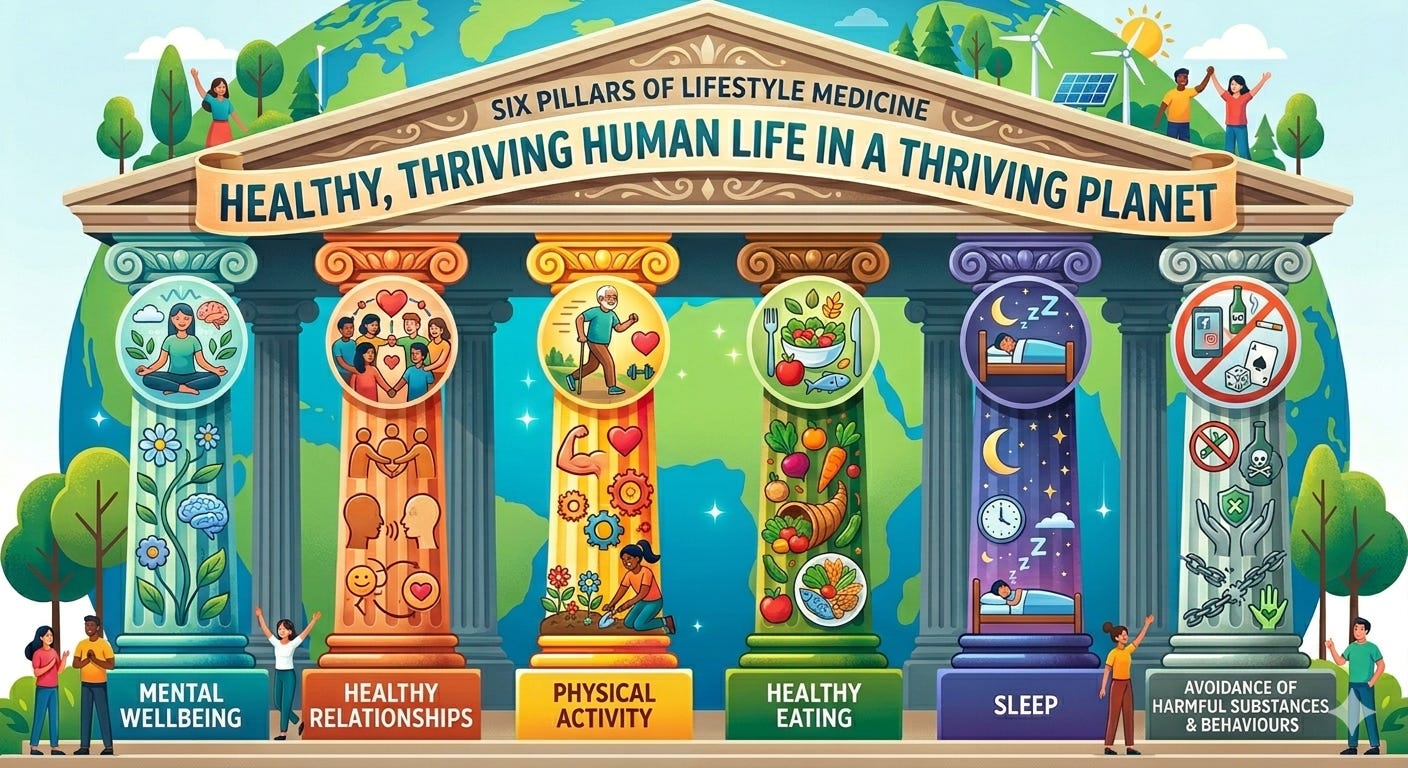
Although the many LM-focused institutions in the world have evolved autonomously, they are in firm agreement about the six pillars that make the foundation of health: (1) Mental wellbeing, (2) Healthy relationships, (3) Physical activity, (4) Healthy eating, (5) Sleep, (6) Avoidance of harmful substances and behaviors.

It would be fair to observe that the Eastern traditions (Ayurveda, TCM, and probably others) never lost their lifestyle-medicine orientation in the way Western medicine did during the pharmaceutical revolution, only to rediscover it a century later. However, it is also worthwhile that with wisdom and means of modern times, we have built that much-cherished resource: evidence. Each of the six pillars has independent evidence on health linkages:

  1. Mental wellbeing: Positive psychological well-being independently predicts lower all-cause mortality in both healthy and diseased populations

  2. Healthy relationships: Strong social ties are associated with a ~50% increase in odds of survival over follow-up - an effect comparable to quitting smoking and larger than obesity

  3. Physical activity: Structured exercise is at least as effective as pharmaceuticals in treatment for several chronic conditions like coronary heart disease and rehabilitation after stroke

  4. Healthy eating: A Mediterranean dietary pattern reduces major cardiovascular events by roughly 30% in high-risk adults

  5. Sleep: Both short (<7h) and long (>8–9h) sleep duration independently linked to all-cause mortality risk in a U-shaped curve

  6. Avoidance of harmful substances: Lifelong smoking shortens life by about 10 years; quitting by age 40 recovers about 9 of those years

So what?

We know most of this already. Of course if we could all eat less, move more, sleep well and have healthy relationships, we’d be invincible. What is the big idea about creating a whole medical discipline about it?

LM is not just building the evidence for the value of lifestyle interventions; it is also building evidence for actionability. It acknowledges that giving people generic advice to “Eat less, move more” does not work. And therefore, it teaches clinicians the specific dose-response parameters that turn each pillar into a prescription. Physical activity comes with explicit targets based on meta-analyses. Dietary interventions are operationalised through scored, validated patterns (like the Mediterranean Diet Adherence Screener and the DASH score) rather than vague advice to “eat healthy.” Behaviour change itself is taught as a structured clinical skill which uses evidence-backed models of behavior change. The result is a structured clinical medicine rather than well-meaning wellness advice: a specific protocol, individualised to each patient, with measurable outcomes at each follow-up.

What is fascinating for me is that because many of these fields of expertise emerged during the lifetime of currently practising clinicians, this is not something they were actively taught during their training. I graduated from med school in 2004. While my textbooks certainly instructed me to “advise lifestyle improvements” to people with chronic diseases, it was as an adjunct to medical treatment, rather than as a possible, achievable, alternative. And there was no clarity on what that advice might look like. Even today, most formal medical training does not yet cover the science behind the impact of lifestyle factors on health and how to best support people with sustainable lifestyle change. But at the same time, there is an increasing recognition - both among patients and providers - that non-pharmacological-non-surgical treatment modalities are valuable and necessary.

And so, the doctors are learning. As of early 2026, about 10,000 clinicians from over 90 countries have earned Lifestyle Medicine certification from one of the four certifying institutions: the American Board of Lifestyle Medicine (ABLM), the International Board of Lifestyle Medicine (IBLM), the British Society of Lifestyle Medicine (BSLM), and the Australasian Society of Lifestyle Medicine (ASLM). This is the cohort of people leading the charge towards the creation of healthcare system where prevention and wellbeing receive as much attention as (if not more than) medical and surgical interventions.

When I started this course, I half-expected something closer to a self-help book in a white coat: well-meaning prescriptions to eat your greens and walk more. Instead, I’m two months in and learning to score Mediterranean diet adherence on a validated 14-item screener, to titrate exercise the way I’d titrate a statin, and to measure my patient’s loneliness on the UCLA scale before I measure her HbA1c. It is, unmistakably, medicine. What has surprised me more is that it is also the most patient-respecting medicine I have ever practised. More on that next week.

Next:

Part 2 (of 2): Five themes that define this science and underscore its value at this moment in history.

Tuesday, May 26, 2026

Coming full circle to a career in medicine

Photo by Rémy Penet on Unsplash

For a long time, decades even, I used to hesitate to tell people that I am a doctor. People would clutch their pearls in horror. Wait you’re a doctor and you don’t practice? Why?

Here is an incomplete list of statements people have said to me:

Don’t you think maybe you wasted a medical seat?

You could have helped so many people!

You did MBBS and then you did an MBA? That’s weird choice, no?

Did you really need an MBBS degree for the work that you actually do?

To be fair, there is plenty of support and validation too, and it has increased with every passing year. The dataset of people making unconventional career choices and transitions has continued to expand, as has the definition (and acceptance) of “weird choices”. I seem to be living in a brave new world, externally and internally. Externally, my world is now made of people who live freedom-filled, values-driven lives themselves, and have little headspace or inclination to judge me. My internal environment is also better: that part of my brain that worried about people’s opinion of me seems to have shrunk significantly. One day might disappear altogether, that’ll be even more fun.

In this brave new world, I feel ready to examine the reasons why I walked away from a career in medicine (especially now that I am sauntering back in). The short answer is that I was miserable. One hour of working in the hospital felt like 7 hours outside the hospital: I was living the reverse of a dog’s life. With my newly trained coaching mind, I ask myself: why was I miserable? I find a lot of answers. The profession seemed to demand from me a single-minded focus - at the cost of my wellbeing and joy – that I simply wasn’t capable of. There was a constant celebration of hierarchies and power imbalances that sucked my soul. I was too young, too exhausted, too terrified to see any purpose or meaning in the work I was doing. And unsurprisingly given the above, I was convinced it wasn’t meant for me, and I had chosen it purely out of social pressure.

And so, as soon as I could, I walked away. I wandered a bit, worked in the Indian Navy and in strategy consulting, found my feet in the world of global public health, and found purpose and contentment. The work-life I have been able to build for myself sometimes feels almost too good to be true: it feels like I get paid to play with jigsaw puzzles which have meaning. My colleagues are some of the sincerest humans on the planet who spend their lives untangling the complexities around tricky global health challenges – Tuberculosis (TB), HIV, Sexual and reproductive health (SRH), non-communicable diseases (NCDs). This work has given me everything: credibility, the conviction that I have contributed to the creation of health equity, a love for building excel models.

To answer the two questions I used to get asked most often, in the days before the brave new world:

Does my MBBS degree feel like a waste? No.

Do I actually use anything that degree? Yes. Big time. The three biggest gifts that pay off every single day are:

  1. The friendships and the community. What would I be without the friends I made during my MBBS days? They literally made me. From a confused 17 year old who entered med school because she wanted to impress people to the 23 year old who said eff this, this is not my life – this chosen family of mine saw me, held me and continues to take care of me.

  2. The focus and discipline. My StrengthsFinder analysis says I am a learner. But of course I am. I spent my party-going years with Grey’s Anatomy and Harrison’s Principles of Internal Medicine. Learning is a constant source of joy for me because my neural circuits were forged in med school.

  3. The respect and attention. We still live in a world where to be a doctor is an instant ticket to respect. “She’s a doctor” – is how my then-boyfriend-now husband introduced to his parents to fast-track their approval. From Delhi to Lilongwe to Manila, ministry of health folk were more open to working with me because of that MBBS degree.

Powerful as these gifts are, they weren’t enough to keep me in medical practice. I am convinced we all have a powerful inner compass that gives us extreme discomfort when we move towards territories that aren’t right for us. I have never been able to ignore those inner instructions – sometimes I listen and act right away, at other times there’s a lag between my listening and acting. When I look back on the terrain we (my inner compass and I) have covered, my life makes sense to me. My “weird choice” to quit medical practice brought me the experiences that were meant for me: to travel and work in over 40 countries, to meet people who would inspire me, to build friendships that expand my heart and mind, to meet and partner up with a lovely man.

But this joyful life that combines love, safety, stimulation is just a pitstop. We are all living our own hero’s journeys, the next adventure is just around the corner, so we know to never get too comfortable. My inner mapmaker is sending me on strange new side quests. Over the past couple of years, I have been finding myself covering unexpected new terrain. Last year, I did a yoga teacher training (YTT) course because I wanted to deepen my own yoga practice. I also did an ayurveda foundations course because the ashram where I did the YTT had the world’s most charming ayurveda teacher and I wanted to study with her. And then I learned that Martha Beck, who is one of my favourite writers and thinkers, teaches a coaching certification called the Wayfinders Coaching Program. As I was evaluating the decision, my partner invited me to notice that I have been coaching people for years. As he said to my brother: “At any point in time, Manjot has an informal cohort of 5-7 women who speak to her regularly as they navigate challenges in their health, relationship or work. Anytime someone wants to quit a job they don’t like, or a relationship that isn’t working, somehow, they find her, and she talks them through the process of making the leap”. Of course you have to do it, said my brother, and decided to sign up too. So here we are, brother and sister, learning to become Wayfinder coaches. He’s one of my favourite humans in the world, and it is utterly delightful to do this learning journey together.

The new terrain has been expanding rapidly. About halfway through my coaching certification, I received (and followed) yet another set of inner marching orders for yet another learning journey. In March this year, I started a yearlong course in lifestyle medicine (LM), which is an emerging medical specialty that uses evidence-based lifestyle interventions to prevent, treat (and when possible, reverse) a range of conditions: diabetes, hypertension, obesity and mental health issues. More on this later.

My multiple side quests are clearly converging towards something, but I don’t know what it is yet. How does a coaching, yoga, and lifestyle medicine come together to create something? What am I becoming? A wellness coach? A lifestyle medicine doctor? I don’t know yet, but I am excited to find out. I seem to be re-entering a persona I believed had put aside for good: that of a healthcare practitioner. It feels like a full circle moment. Or is it a moment on a spiral? Didn’t Julia Cameron say something like growth being a spiral process, doubling back on itself, reassessing and regrouping? At this point on the spiral, I’m stepping into the world of medicine again. This time, on my own terms, at my own pace. I am building expertise in the things that interest me and make sense to me: the whole person approach, women’s health, the linkages between human habits and disease. It feels like returning to an old home and finding that it’s not just that I have changed, the home has changed too.

This is the adventure now, balancing my day job in public health - which continues to bring joy – with the demands of lifestyle medicine education. It helps that this line of education is very aligned with my personal values and habits. My tendency to go down rabbit holes is not only okay but actually rewarding. I read an interventional study on diabetes remission, and I started wondering what other diseases can see remission through lifestyle modification. And down I go, spending the next 4 hours discovering something called “deprescribing” (the opposite of prescribing meds). I read the history of Ancel Keys and his 7-country study that changed the way that we look at saturated fat, and I spent the next three days reading about the controverses around fat, the challengers to “Fat is Bad” hypothesis and the more nuanced take we have now landed on. Just like me, the fat hypothesis is evolving rapidly.

I look forward to a year of learning, getting lost in rabbit holes, essays to write, viva-voces to prepare for. This is my Candyland. And in the process, I am becoming my next iteration: a coach who combines a knowledge of medical science and life coaching skills to create optimal health outcomes.

As I learn, I’m going to write (because that’s the best way to learn anything) - about health research that blows my mind, about my reflections on health inequities, about anything that I find interesting and useful. I am hoping to build a community of people interested in learning with me. And if you’ve read this far, and if you’re interested, come say hello to me in the comments! And tell me: what health conditions are you thinking about the most? What questions should I dive deeper into?

Next week: What is Lifestyle Medicine anyway?

Saturday, December 27, 2025

From skepticism to respectful curiosity: the story of my evolving journey with Ayurveda

One of the most interesting features of the human condition may be our ability to hold multiple, heterogenous identities. And it gets more interesting when the identities seem to contradict one another. I have a fairly large set of these personal identities which, at the surface level, seem to be at odds with one other and bring me varying degrees of entertainment. One of my least controversial (and getting more acceptable by the day) internal paradoxes is my relationship with traditional medicine: I trained to be a medical doctor under western medicine and I feel an irresistible tug towards traditional medicine, especially Ayurveda.

Photo by Katherine Hanlon on Unsplash

I started out with fairly uncomplicated, homogeneous ideas: I went to medical school, got an MBBS degree and held a small degree of skepticism towards traditional medicine. I learned and used the labels: pseudoscience, woo-woo, jholachhap medicine, unsafe. When I transitioned away from clinical work and into public health work, I found that the attitude of condescension towards traditional medicine is pervasive among global public health practitioners too. In my work as a public health specialist, I have examined ways to integrate traditional healers (also called informal providers) into the public health system, but primarily as people who would refer patients to the formal care system, not as partners in care.

But slowly, over the past few years, I have been changing my mind. There are two drivers of this shift, one internal, one external.

The external driver.

The first driver of my interest in traditional medicine is my observation that, for various reasons (but primarily capitalism), the way modern medicine is practiced is not the most human centric.

I feel the need to caveat this point. I went through the hoops myself. I have friends from med school who are literal pieces of my heart, whose lives and well-being are matters of importance to me. I know how hard a doctor’s life is. Every step is fraught with nerve-wracking experiences: getting into med school, then a master’s program, the decades of studying and getting bullied. And when you’re done studying, you’re just getting started - with struggle that is modern medical practice. It goes without saying that doctors care about their patients, but it’s also easy to understand the pressure to keep an eye on the margins. More the capital invested in infrastructure, more the pressure. Elements that are valuable to me as a patient are sources of inefficiencies in a modern hospital - choosing observation over intervention, responding to unending questions and doubts. And although we were taught that “health is a state of physical, mental, emotional and spiritual well-being and not merely an absence of disease”, when was the last time a doctor asked you about your social or spiritual life? It’s not a question of intent; they just don’t have the time.

Second, I have come to believe that traditional medicine’s model of care (gentle, approachable, ubiquitous) offers a possible solution to the severe GP (general practitioner) gap in healthcare. The world’s need for specialists is so great that the universe of family medicine practitioners and GPs has been shrinking. The OECD reports that in Australia, the UK and Denmark, the share of generalist medical practitioners decreased by more than 20% between 2000 and 20171. We don’t have data on India, but various experts have pointed to a “silent death of family medicine practice in the country”2. It is possible that this GP-gap is being filled by practitioners of traditional medicine. These doctors seem to have all the time in the world. They take detailed case histories (a friend recently shared that her history-taking process with a traditional medicine doctor lasted 3 hours). They are deeply interested in people’s social and emotional contexts, and they seem more open to being questioned and doubted.

So that’s the external driver of my interest in TM - that modern medicine can not and is not serving all the health needs of people, and that there is a clear need for the kind of intentional, holistic, slow-moving care that traditional medicine can provide. There’s also an internal driver to my growing interest in traditional medicine.

The internal driver, i.e. my intuitive self.

As I grow older, my intuitive self is becoming as powerful as my rational self, and they are rapidly becoming friends. I’m learning to rely on my body as much as I rely on my mind. Given that I have been inhabiting this body for over four decades, it feels logical that we have an intimate relationship which makes me the no. 1 authority on this body. Second, I’m the person who is most invested in the health outcomes of this body because I am the one who has to live with it for a few more decades. So I have both – the highest degree of expertise and the highest degree of investment. Ergo, the intuition that emerges from this body is as important as published science. Another personal observation is that the older I get, the happier I am. It is possible that this movement from living a purely logic-driven life to a life guided by intuition bodes for joy and well-being. And what does my intuitive self say? It says it trusts Ayurveda. It says that it is narrow minded to trust only a small set of “proven” things. It says that many of the things that seem “woo-woo” or magical today might just become proven science tomorrow, so keep an open mind.

I smell colonialization.

I hope we can appreciate the irony that the modern medical profession seems to be ruled by a near religious reverence for randomized control trials (RCTs). There’s a deeply held, passionately defended idea that the only real knowledge is the one that is read and written. RCTs are believed to be only way to establish evidence and efficacy; knowledge acquired through thousands of years of direct observation and introspection is deemed not merely inadequate or suspicious but potentially dangerous.

The large scale rejection of traditional medicine almost feels like a colonialization of healing. The power imbalance between Western and Eastern/traditional medicine has been systematically strengthened through labels - like “barefoot doctors” or “informal providers” - that effectively reduce trust. But like all colonial movements, this one is under threat too. It is no longer strategic or even possible for modern medicine to operate from a place of disdain towards traditional medicine. Public health and conventional medicine are losing the people who might have been helped if their questions and doubts had been treated with respect. Movements like MAHA and other anti-vaccine movements did not emerge from nothing. It is possible that they are a reaction (overreaction? maybe) to the authoritarian, “just trust me, don’t ask questions” attitude from modern medicine.

I feel hopeful.

At this point in my journey of curious exploration, I feel a mix of openness and hope. My current state of being is that of an adventurer, excited about a new landscape of learning. And just like any hero starting on a new journey, the universe has already started to help. I recently found and enrolled with an Ayurveda teacher who respects science and modern medicine, and yet, remains utterly, joyfully committed to the idea that the human experience is more than just the things that can be scientifically proven.

I see plenty of evidence that there is a growing cadre of modern doctors and public health specialists who find that traditional medicine makes sense – both to their logical and intuitive selves - and I am noticing an exciting trend of alignment between modern and traditional medicine. The alignment between these seemingly separate tracks is showing up in healthcare terminology: functional medicine, integrated medicine, holistic healing and most recent (and my favourite) - progressive medicine. My favourite podcaster and doctor, Rangan Chatterjee, believes that Ayurveda and traditional Chinese medicine are valuable partners in disease prevention and well-being. The WHO Global Traditional Medicine Centre hosted a Global Summit on Traditional Medicine earlier this month (December 2025). In an era of instability, the summit asked pertinent questions like: How can traditional medicine restore balance in an unstable world?

The science is evolving too; with every passing year, “woo-woo” advice from traditional medicine is not only being experimenting with but also being proven as accurate and relevant for modern times. Traditional medicine principles are undergoing RCTs and other types of evidence generation processes. This increasing body of evidence, and my own personal experiments and experiences are shaping the type of healthcare access I now dream of: hyper-personalized and whole-human centered (rather than disease-centered) care where people get to choose the care model that meets their preferences. Personally, I am excited about exploring these traditional sciences even for the areas where evidence does not exist (yet). A scientist who respects traditional medicine is not a paradox anymore; I am simply an open-minded pragmatist.

Sources:

  1. OECD (2020), Realising the Potential of Primary Health Care, OECD Health Policy Studies, OECD Publishing, Paris, https://doi.org/10.1787/a92adee4-en.

  2. Kumar R. The curious case of extinction of family physicians from the Indian Health System - An open letter to the members of the National Medical Commission: Draft competency-based medical education curriculum regulations 2023 - Complete exclusion of family physicians/family medicine education from the MBBS course curriculum! J Family Med Prim Care. 2023 Aug;12(8):1477-1484. doi: 10.4103/jfmpc.jfmpc_1323_23. Epub 2023 Aug 29. PMID: 37767427; PMCID: PMC10521820.

Google Analytics